
What Are Malas?
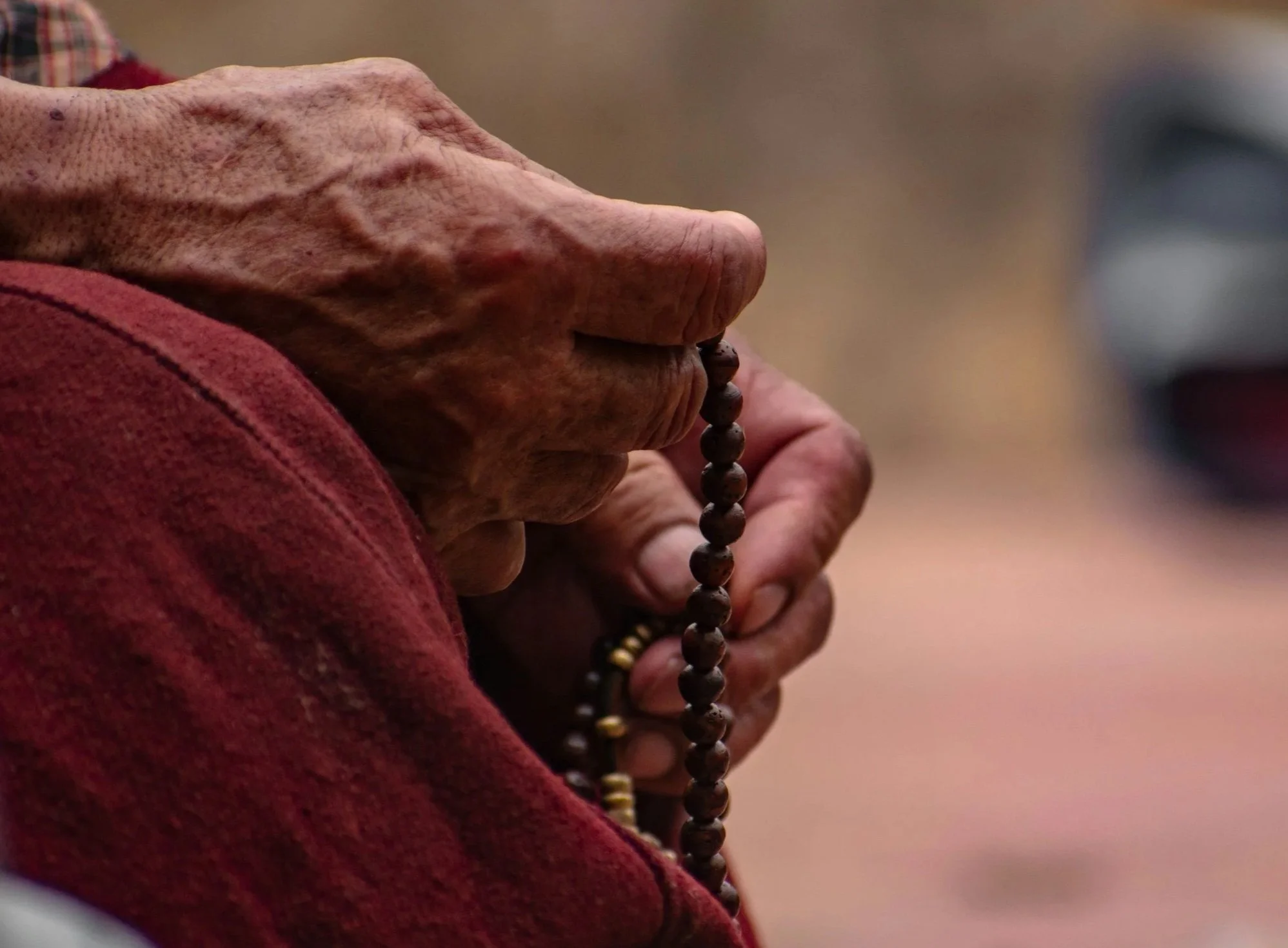
A mala (sometimes called a japa mala) is a strand of beads traditionally used as a tool for meditation, prayer, and mindful repetition. Malas originated in ancient contemplative traditions of India and have been used for thousands of years in practices associated with Hinduism and Buddhism.
Most traditional malas contain 108 beads, though some smaller versions may contain 27 or 54 beads. A larger bead, often called the guru bead or meru bead, marks the beginning and end of the cycle.
Malas are commonly used while repeating a mantra—a word, phrase, or sound repeated during meditation to help focus the mind and cultivate awareness.
While malas have deep spiritual roots, today they are also used by many people as tools for mindfulness, stress reduction, and contemplative practice.
How Malas Are Used
During meditation or reflection, the practitioner moves one bead at a time through the fingers while repeating a mantra, affirmation, prayer, or mindful breath.
A typical practice may include:
Holding the mala in one hand.
Starting at the bead next to the guru bead.
Repeating a mantra, prayer, or breath awareness for each bead.
Continuing around the mala until the cycle is complete.
This rhythmic movement can help anchor attention and bring the mind back to the present moment.
Why Malas Traditionally Have 108 Beads
The number 108 has symbolic significance in several contemplative traditions and philosophical systems. In some interpretations within Hinduism and Buddhism, the number represents completeness or the interconnectedness of existence.
Other interpretations relate the number to ancient cosmology, sacred geometry, or traditional spiritual teachings.
Regardless of the interpretation, the number serves a practical purpose: it provides a structured cycle for meditation and repetition.
Benefits of Using a Mala
While malas are rooted in spiritual traditions, many people today use them as simple tools for supporting mindfulness and contemplative practice.
Supports Focus During Meditation
Moving the beads provides a physical anchor for attention, which can make it easier to stay present and engaged in meditation.
Encourages Consistent Practice
The structure of moving bead by bead creates a natural rhythm that helps guide the duration of a meditation session.
Reduces Mental Distraction
The tactile sensation of the beads can help redirect wandering thoughts and bring awareness back to the chosen mantra or breath.
Supports Stress Reduction
Meditative repetition and rhythmic breathing have been associated with the body’s relaxation response, a concept widely studied in modern mind-body research.
Creates Meaningful Personal Ritual
For many people, malas become personal objects of reflection or intention, marking time set aside for contemplation, prayer, or mindful awareness.
Malas in Modern Mindfulness Practice
Today, malas are used by people from many different backgrounds. Some use them in traditional mantra meditation, while others use them for:
🌿 Breath awareness
🌿 Gratitude practice
🌿 Affirmations
🌿 Prayer
🌿 Quiet reflection
In this way, malas can serve as simple tools for cultivating presence, calm, and intentional awareness in daily life.
A Simple Way to Begin
If you are new to using a mala, you might start with a simple practice:
🌿 Sit comfortably.
🌿 Take a slow breath.
🌿 Move one bead at a time while repeating a word, affirmation, or mindful breath.
🌿 Continue until you reach the guru bead.
Even a few minutes of quiet repetition can help support a sense of calm and clarity.