
Petals & Planets October 10, 2026
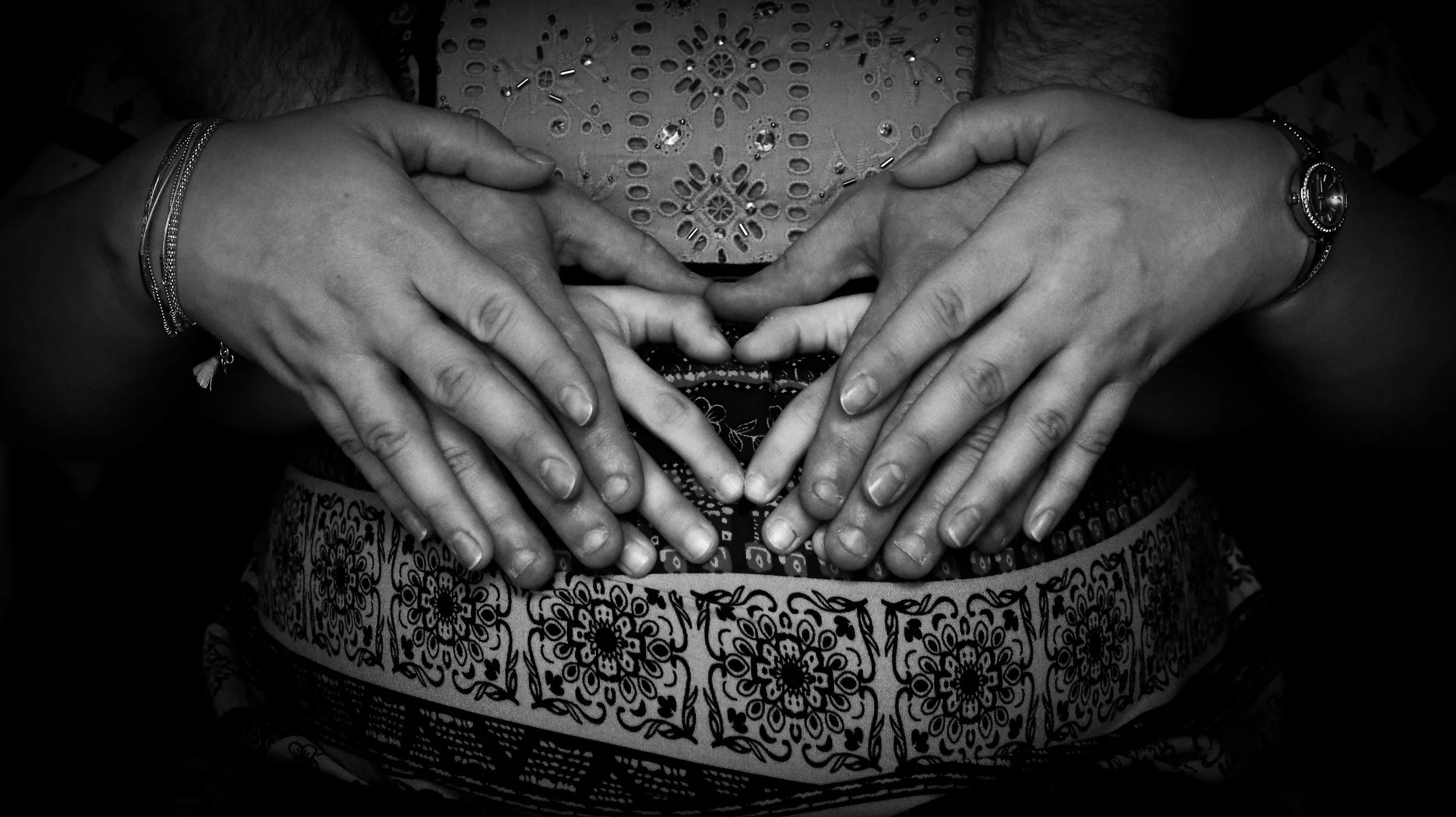
“If you feel lost, disappointed, hesitant, or weak, return to yourself, to who you are, here and now and when you get there, you will discover yourself, like a lotus flower in full bloom, even in a muddy pond, beautiful and strong.” ~ Masaru Emoto, The Secret Life of Water
A Practice for Peace & Reconciliation
There are moments when we are asked to pause and consider not only where we have come from, but what we are choosing to carry with us.
We inherit so much from those who came before us—stories, values, strengths, wounds, ways of loving, ways of protecting ourselves, and patterns we may not even realize we are carrying.
Some of what we inherit is precious and worth tending.
Some of it may no longer belong to us.
And sometimes, making peace does not mean forgetting, excusing, or pretending that something never happened. It may simply mean acknowledging what has been, understanding what it has taught us, and consciously deciding what we want to carry forward.
This is one of those moments to pause between what has been and what is becoming.
To remember.
To reconcile.
To make room for something new.
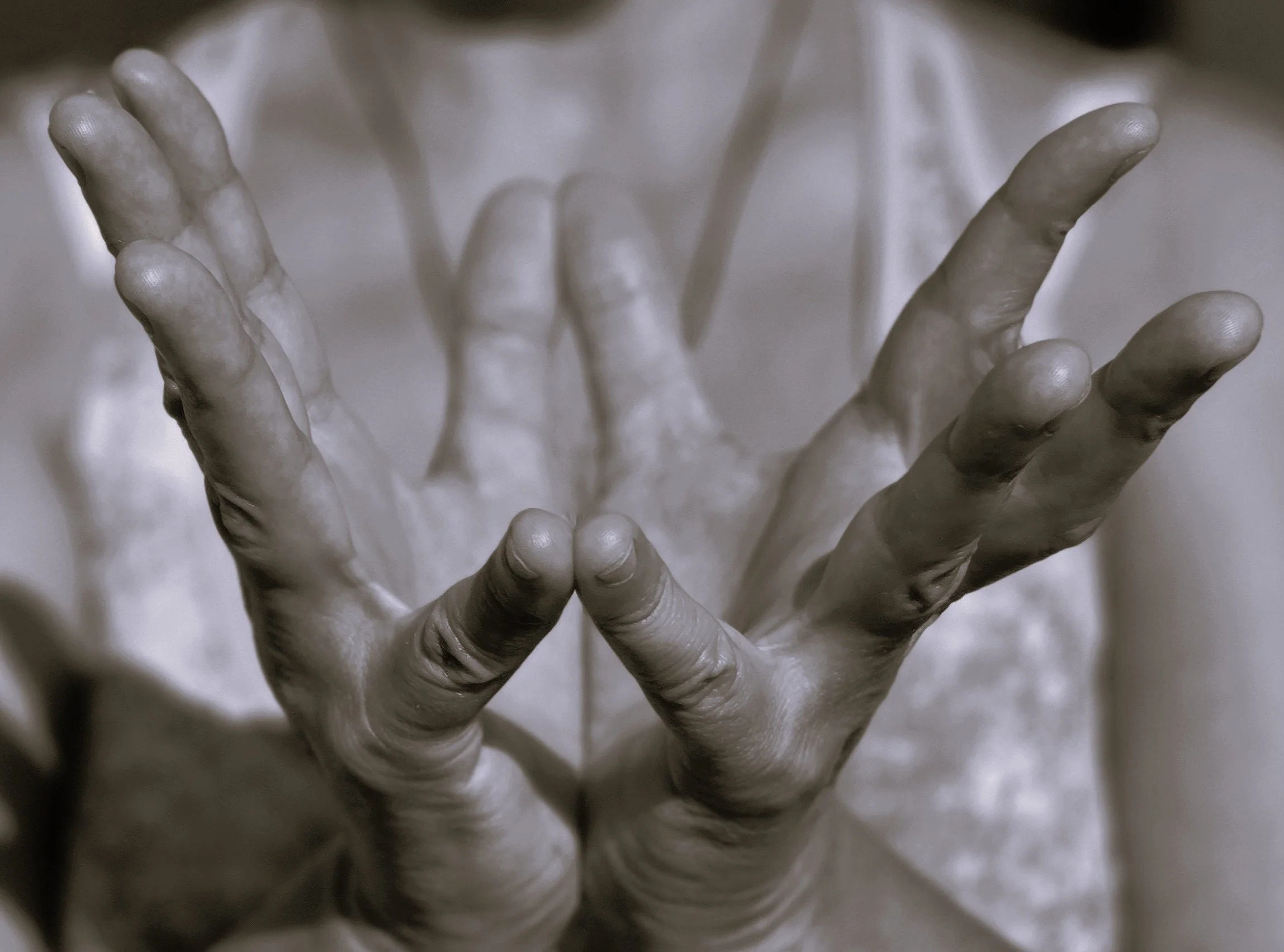
Lotus Mudra
Gesture of Opening & Renewal
Lotus (Padme) Mudra is a heart-centered gesture inspired by the lotus flower, which grows from muddy water yet opens toward the light.
How to Practice
Bring your palms together in front of your heart.
Keep the bases of your palms, thumbs, and little fingers connected while opening the remaining fingers outward, creating the shape of a lotus flower.
Allow the hands to remain soft rather than forcing the fingers open.
Close your eyes if that feels comfortable, and take several slow, natural breaths.
As you practice, consider:
What am I ready to make peace with?
What am I ready to let go of?
What am I choosing to carry forward?
Remember: There is no need to force the position or the breath. Keep the hands soft and choose whatever feels comfortable for your body. If closing your eyes feels uncomfortable, simply keep them open with a soft gaze.
Supportive Qualities
Openness & Receptivity — encourages a willingness to meet the present moment without needing to control what arises.
Peace & Reconciliation — creates space to soften our relationship with the past and make room for greater inner peace.
Release & Renewal — supports the symbolic movement of letting go of what has completed its purpose and opening toward what comes next.
Compassion & Understanding — invites us to meet ourselves, our families, and our histories with greater tenderness.
Transformation & Growth — reminds us that difficult circumstances do not have to determine what we become.
Connection & Belonging — can create a sense of connection with the people, stories, and experiences that have helped shape our lives.
A Gentle Note
Lotus Mudra is a heart-centered gesture that invites us to consider how beauty, wisdom, and new life can emerge even from difficult or complicated circumstances. Like the lotus itself, we do not have to deny the mud in which we have grown in order to appreciate the flower.
We can honor where we have come from without remaining bound to it.
We can acknowledge what has been difficult and still choose peace.
We can remember those who came before us and still become something new.
We can carry wisdom without carrying every wound.
We can allow old patterns to end without rejecting the people or stories that shaped us.
We can open toward what is possible without needing to forget what came before.
CAUTION
Keep the hands, fingers, and wrists relaxed. Do not force the fingers into a wider opening or press the palms together if doing so causes discomfort.
There is no particular posture or flexibility required for this practice. If you experience pain, numbness, tingling, or strain, gently release the gesture and allow your hands to rest in your lap or another mudra that feels more aligned and comfortable for you.
🔊 Mantra | Nam Myoho Renge Kyo | A Practice of Focus & Renewal
Pronunciation: nahm myoh hoh ren geh kyoh
Nam-myoho-renge-kyo is a traditional Japanese phrase used as a focused chant. The words come from the title of the Lotus Sutra, and the practice is traditionally understood as an expression of dedication to the profound potential within life.
For our purposes, you do not need to analyze the words or understand every layer of their meaning. Allow the sound and rhythm to become a steady point of focus.
Sit comfortably with your Lotus Mudra resting near your heart, or simply allow your hands to rest in your lap.
Begin slowly:
Nam Myoho Renge Kyo.
Repeat the phrase at a comfortable pace.
Let your breathing remain natural.
If your attention wanders, gently return to the sound.
Rhythm & Practice
Find a quiet place where you can sit undisturbed for several minutes.
Light a candle if you wish.
Bring your hands into Lotus Mudra.
Take several slow, natural breaths.
As you breathe, allow yourself to notice the fullness of your heart.
If you are using an essential oil, allow its aroma to become part of the experience.
Then repeat:
Nam Myho Renge Kyo for several minutes or 108 repetitions. (If you have a mala, then you can use it to help you keep track and then sit in Lotus mudra upon completion.)
Slowly. Gently. When you feel ready without needing to force a particular feeling or answer, reflect on these questions:
What is in my hands now?
What am I able to change?
What am I able to let go of?
What am I able to nurture?
How can I make room in my life for something new to emerge?
You might write whatever comes to you without editing or judging it.
There is no need to resolve everything.
Sometimes awareness itself is the beginning of change.
When you finish, place your hand over your heart and say:
“May I meet myself today with the same love I so freely offer others.”
Then rest in the quiet for a moment before returning to your day.
🌿 Essential Oils for Reflection & Rootedness
These oils can accompany a reflective practice by creating an atmosphere of calm, warmth, and grounded presence. Their aromas may become simple sensory reminders to slow down, breathe, and return to the present moment.
Lavender | Calm & Emotional Ease
Lavender is often associated with calm, rest, and emotional ease. Its familiar floral aroma can create a gentle atmosphere for quiet reflection. Learn More
Rose | Love & Compassion
Rose carries a rich floral aroma traditionally associated with love, tenderness, compassion, and the heart. It can beautifully accompany practices centered on forgiveness and self-compassion. Learn More
Cedarwood | Grounding & Steadiness
Cedarwood has a warm, woody aroma that can evoke a sense of grounding, steadiness, and connection to the natural world. Learn More
How To Use: Essential oils are highly concentrated. Always dilute appropriately for topical use and follow the safety guidance for the specific oil you are using. For aromatic use, choose a well-ventilated space and discontinue use if irritation or discomfort occurs. If you are pregnant, nursing, have a medical condition, or take medications, consult an appropriately qualified healthcare professional regarding essential-oil use. Please always double check to assure safe use of essential oils around pets and small children.
🌸 Bach Flower Remedies for Reflection & Integration
Bach remedies are traditionally associated with particular emotional states and can be used as reflective companions rather than medical treatments. The descriptions below reflect traditional Bach associations and are offered as invitations for personal reflection.
Pine | Self-Acceptance & Forgiveness
Pine is traditionally associated with self-blame, guilt, and the tendency to take responsibility for more than is truly ours.
Pine may offer a useful reflection when exploring the difference between responsibility and inherited guilt. Learn More
Willow | Release & Reconciliation
Willow is traditionally associated with resentment, bitterness, and feeling that life has treated us unfairly.
Willow invites reflection on where we may be ready to let go of old grievances and reclaim our ability to move forward. Learn More
Walnut | Staying True to Your Own Path
Traditionally associated with protection during times of transition and maintaining one's own direction despite outside influences. Walnut is especially meaningful when considering family patterns. We can love and honor where we come from while still recognizing that our lives belong to us. Learn More
How to use: Take as directed in water or under the tongue throughout the day.
A Note for Those with Allergies
If you have a nut allergy or any other plant, flower, herb, or essential oil allergy, you can still connect with the symbolic qualities associated with a plant without physically using or being exposed to it.
You do not need to ingest it, apply it to your skin, diffuse its aroma, or handle the plant to explore what it represents.
Instead, take a moment to imagine the plant, its color, its shape, or the environment in which it grows. Reflect on the qualities associated with it and consider how those qualities might relate to your own experience.
You might explore these qualities through:
Visualization — imagine the plant or its natural surroundings.
Reflection — consider the qualities it represents, such as grounding, courage, compassion, protection, or renewal.
Words & Intention — choose a word, affirmation, or personal intention that expresses the quality you wish to cultivate.
Quiet Breathing — sit comfortably, breathe naturally, and allow yourself a few moments of stillness.
Ask yourself:
What quality am I drawn to cultivate?
How might I bring that quality into my daily life?
What simple action would help me embody it?
You do not need the physical plant or product to engage with its symbolic meaning. Sometimes an image, a word, a memory, or a quiet intention is enough to bring a meaningful quality into awareness.
If you have a known allergy, avoid exposure to the relevant allergen, check product ingredients carefully, and follow the guidance of your healthcare professional. Visualization and reflection offer ways to explore symbolic meaning without physical exposure.
This document is intended for informational and educational purposes. Flower remedies & essential oils should be used as complementary wellness practices — not as replacements for professional medical or mental health care. Always consult a qualified healthcare provider before beginning any new health regimen, particularly if you are pregnant, nursing, taking medications, or managing a chronic health condition.
🪷 No Mud, No Lotus
Thích Nhất Hạnh’s No Mud, No Lotus: The Art of Transforming Suffering explores the relationship between suffering and transformation.
The lotus does not grow despite the mud.
It grows through it.
Perhaps this is one of the most compassionate ways we can look at our own histories. We do not have to romanticize what was painful, deny what happened, or carry every wound simply because it was handed down to us.
We can honor the lives, circumstances, choices, and sacrifices of those who came before us while recognizing that their stories do not have to determine our own.
Some things are worth preserving.
Some things are worth healing.
Some things are ready to end with us.
And some things are waiting for us to give them room to bloom.
Peace does not always arrive as a great revelation. Sometimes it begins quietly, with a willingness to look honestly at where we came from, gratitude for what sustained us, compassion for what was imperfect, and the courage to recognize what no longer belongs in our present and future.
Honoring our roots does not require us to remain rooted in the past.
We are allowed to become.
We are allowed to grow differently.
We are allowed to carry the love forward while leaving the pain behind.
So perhaps the question is not only, What have I inherited?
Perhaps it is also:
What will I choose to do with it?
With Love & Care,
Carlie Love, LMBT, CIMI
Petals & Planets | Seasonal Wisdom for Body & Soul
